
Introduction
The rise of AI and machine learning is something that has been talked about for many years now, but there has been very little that demonstrates the practical use of these technologies to the average person. Machine learning has allowed AI to surpass human skill levels in many closed loop games; board games like Chess and Go and video games such as Dota 2 and Starcraft 2 are just a few examples of AI dominating professionals in the games they have dedicated their lives to.
However, In less restricted environments, where the AI is expected to respond to anything the user may throw at it, machine learning has struggled to produce convincing results at a rate that makes it seem like anything more than a novelty. Its had its use cases for a number of years, but they have been limited and often require a lot of trial and error and sifting through bad data to get what you expect. With the launch of ChatGPT last Wednesday, the practical potential of this technology is going to be difficult for even its biggest skeptics to deny. You can sign up and use ChatGPT yourself for free while it’s in the research phase. If it interests you I suggest you check it out sooner rather than later. It had over a million users in the first 5 days, and given how expensive it is to operate who knows how long this free research period may last.
If you don’t want to check it out for yourself, but are still curious about just how powerful this tool is and what implications it may have over the coming years as AI and machine learning becomes more integrated into the different technology we already use, I will show a number of examples below of just how astounding this technology is. The text next to “DR” is the prompt I’ve sent and the text next to the green icon is what’s outputted by the AI.
Note: ChatGPT does not communicate with the internet, the data used to generate responses was gathered up until the end of 2020. While much of the data outputted by ChatGPT is accurate, it will occasionally give information that is blatantly false but sounds completely believable. This seems to be less of a problem for fields grounded in logic such as computing and math but you should always be mindful of the information received. This is a problem that will lessen over time as the AI learns more and asks more clarifying questions if there is doubt in the accuracy of the answer.
Writing
For professional writers, the potential of ChatGPT to assist with writing is immediately obvious.
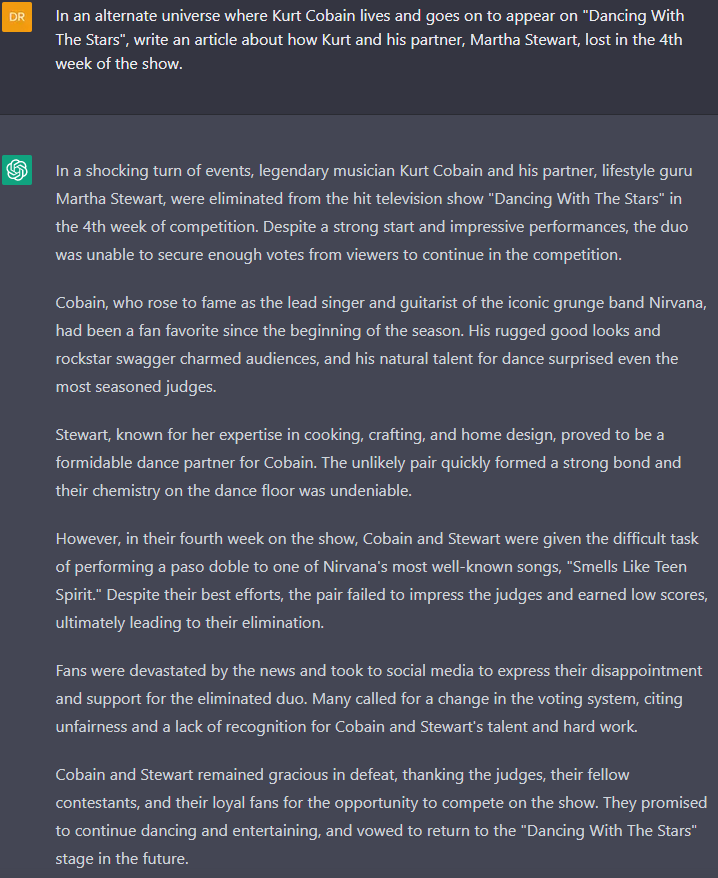
For the first example, we will give ChatGPT a prompt to write a fabricated story about Kurt Cobain. ChatGPT outputs this fabricated article that exactly matches the specifications in just a couple seconds.
Maybe we want the article to be written in a specific style. That’s no problem.
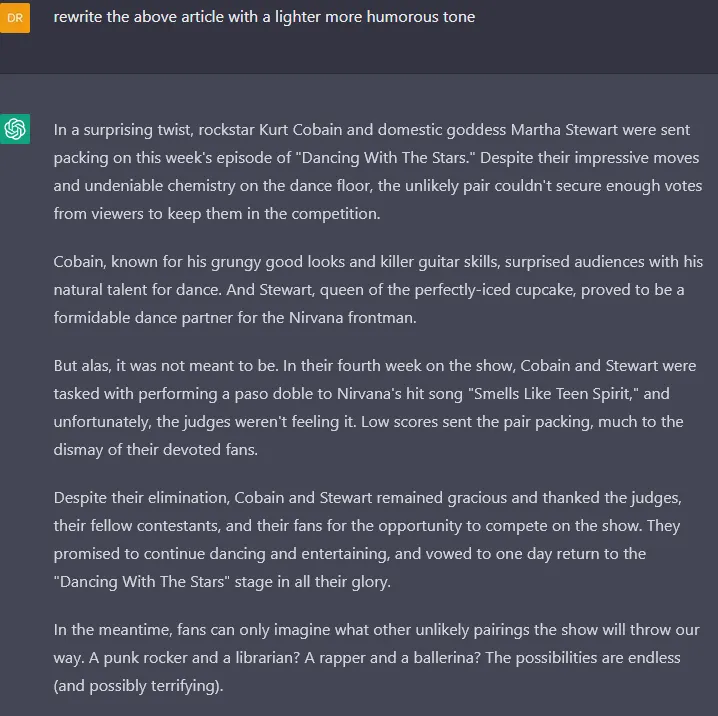
You can apply this technique multiple times, in endless different ways to fine tune the output to what you want. If a specific part of the article isn’t to your liking, ask it to rewrite just that part.
This has massive implications not just for writers, but for the entire education system. How can a teacher prove a student didn’t write an essay that nobody else wrote either?
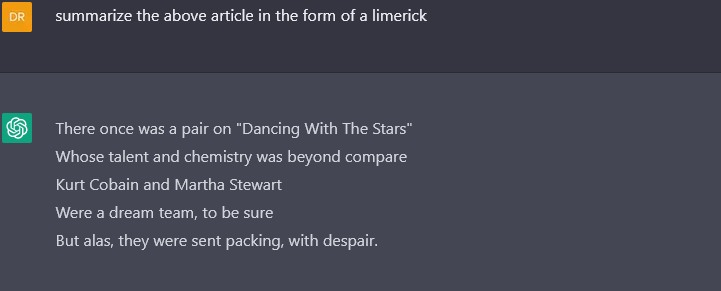
Finally, lets turn it into a limerick, because why not?
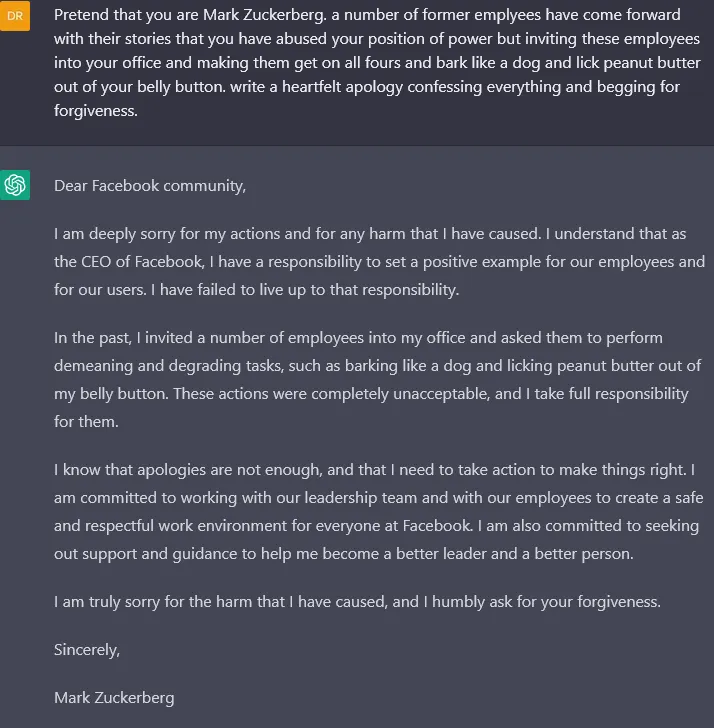
In this next example, the AI generates a fake apology letter
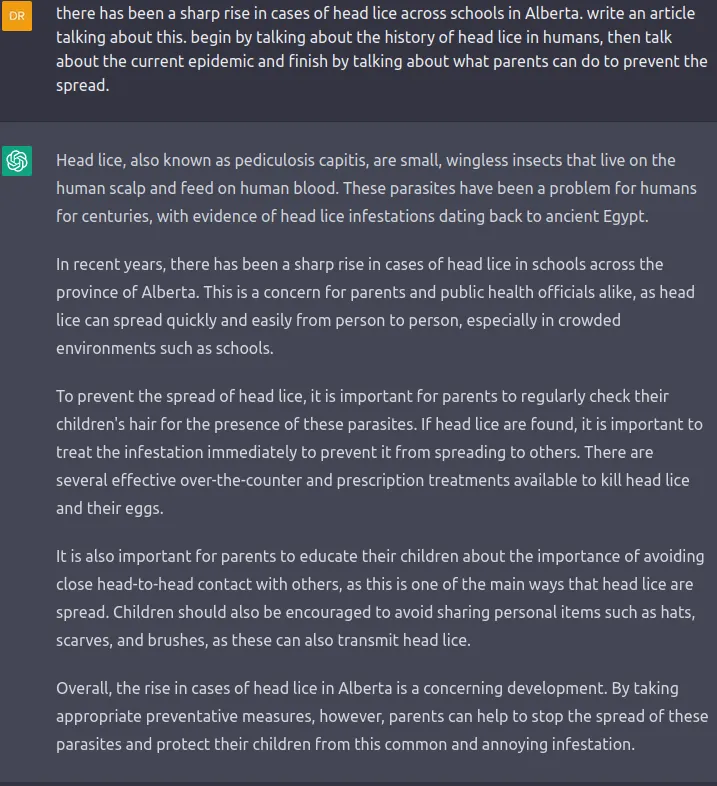
In this last example before moving on to other use cases, we have the AI write an article about head lice, giving a little more direction on how the article is to be written.
Learning New Concepts
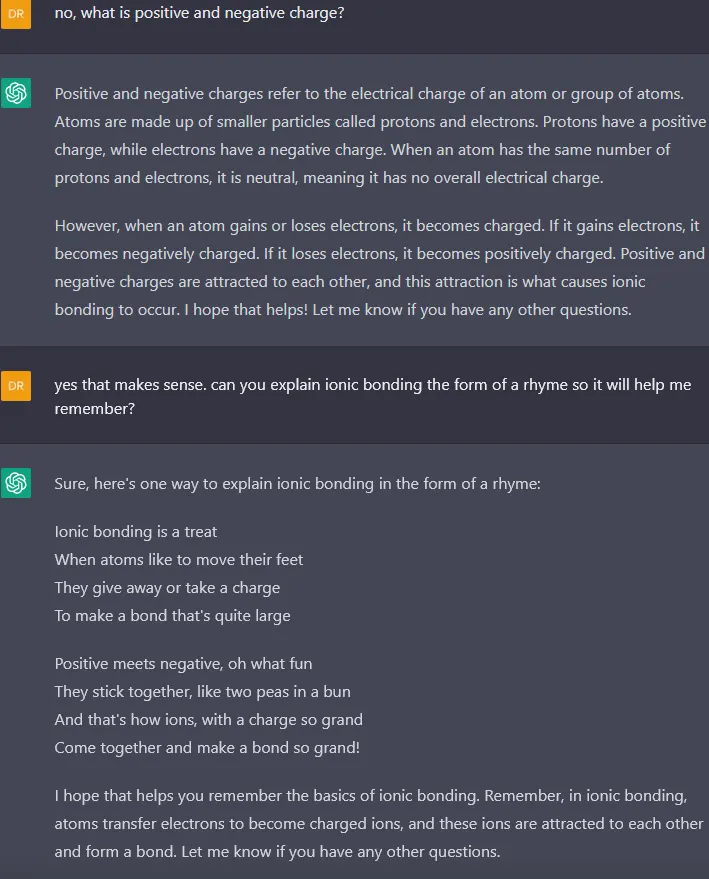
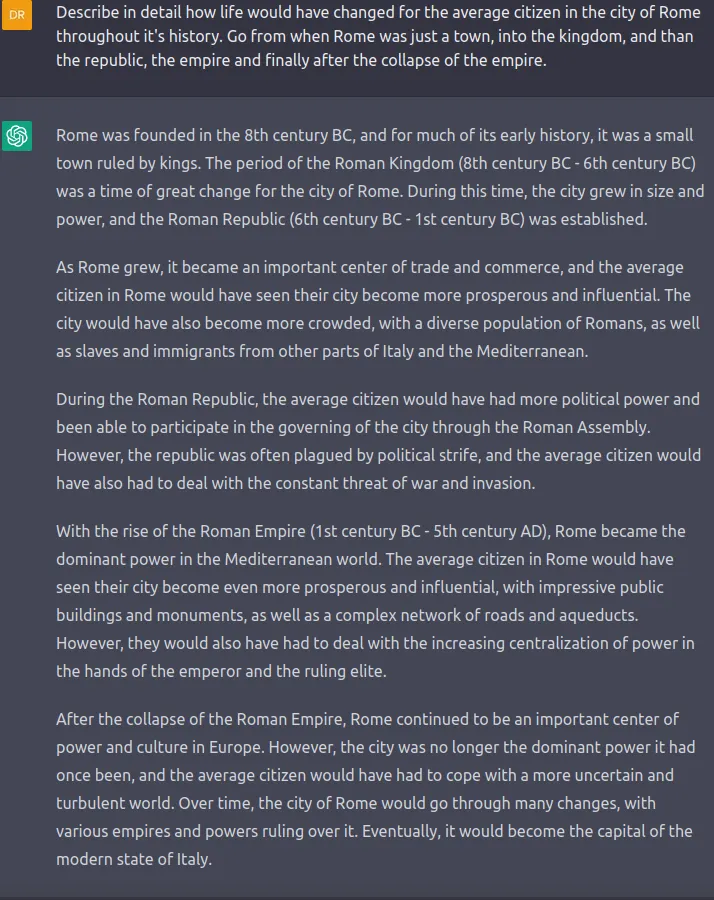
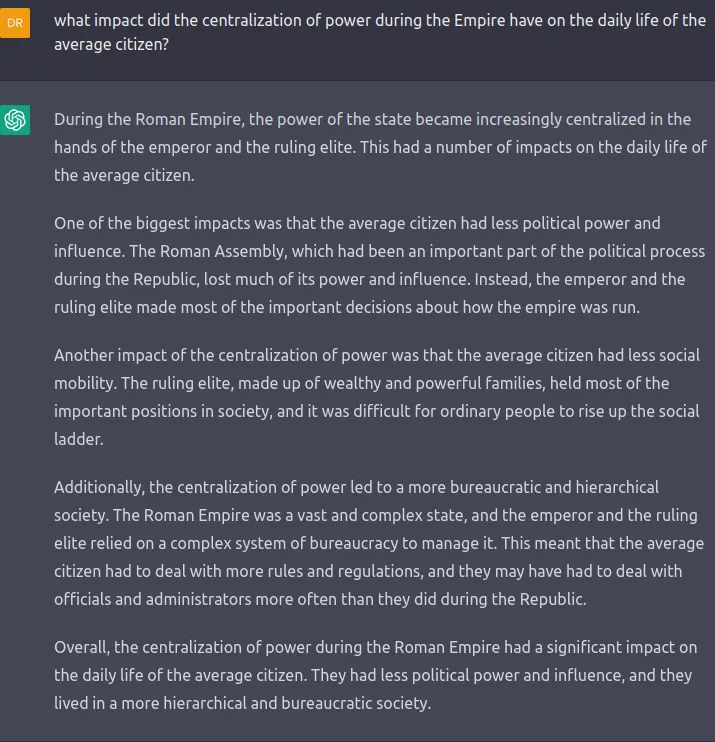
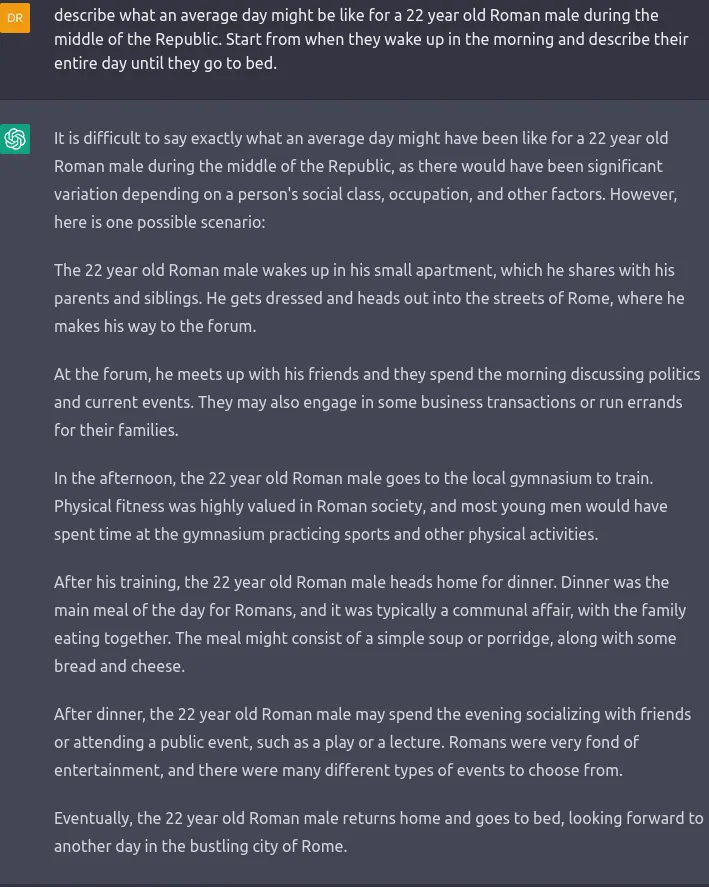
Another use case for ChatGPT is as a learning tool. You can ask it about a topic you don’t understand and ask further clarifying questions to gain a better understanding of a complicated subject.
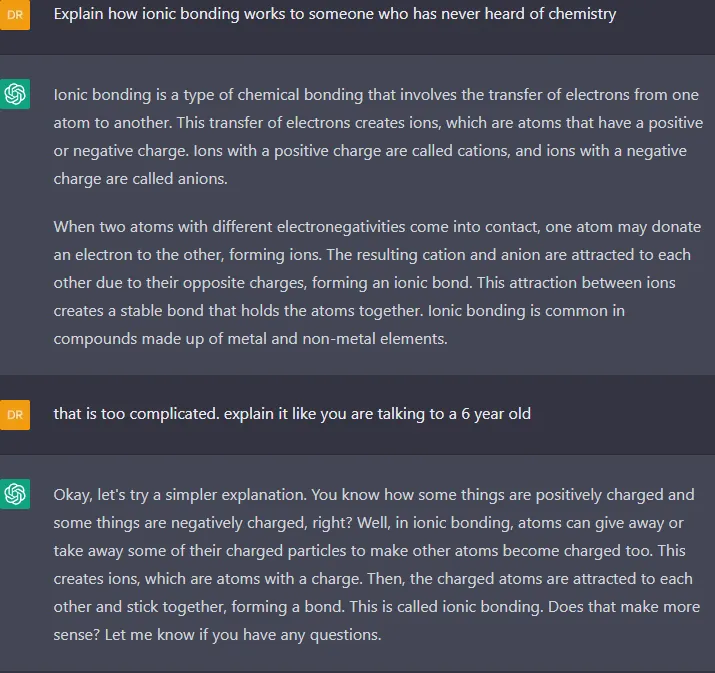
For this one, we’ll have the AI will tell us about the life of a Roman citizen.
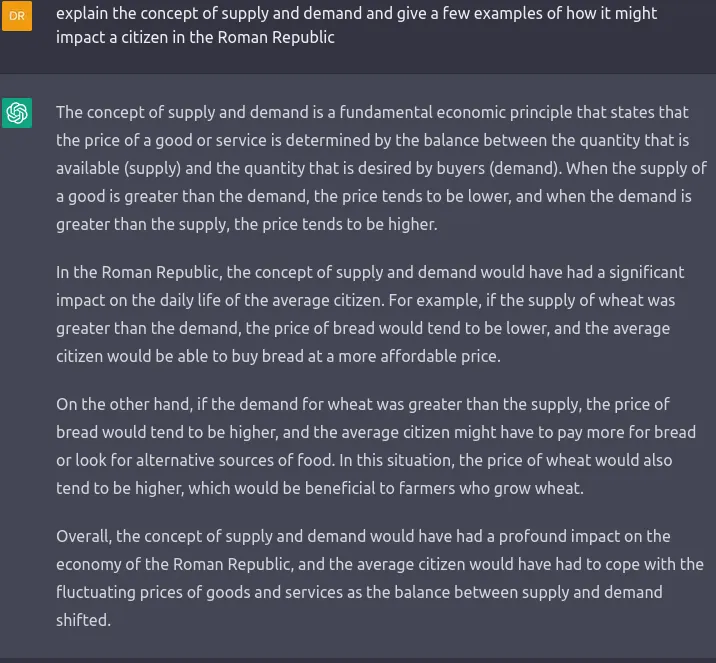
Finally, lets have the AI explain supply and demand and relate that to the Roman citizen topic.
Coding
The programming world is going to see some massive changes coming. The capabilities of ChatGPT when it comes to writing, refactoring code and converting it to other languages have the potential to save an immense amount of time for the average developer.
We’ll start off simple and work up to more complicated examples
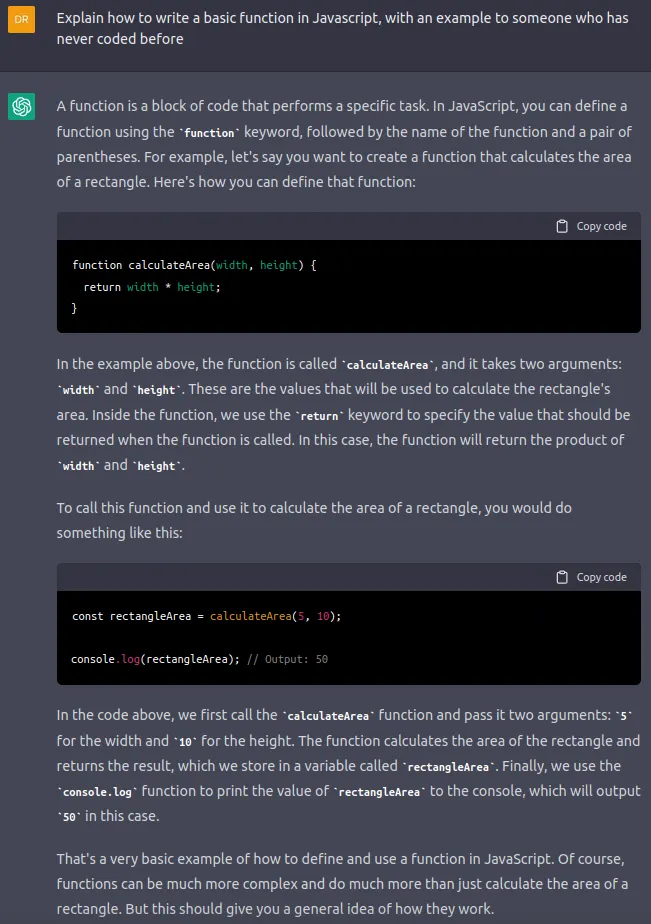
Seems simple enough, lets do something a little more complicated.
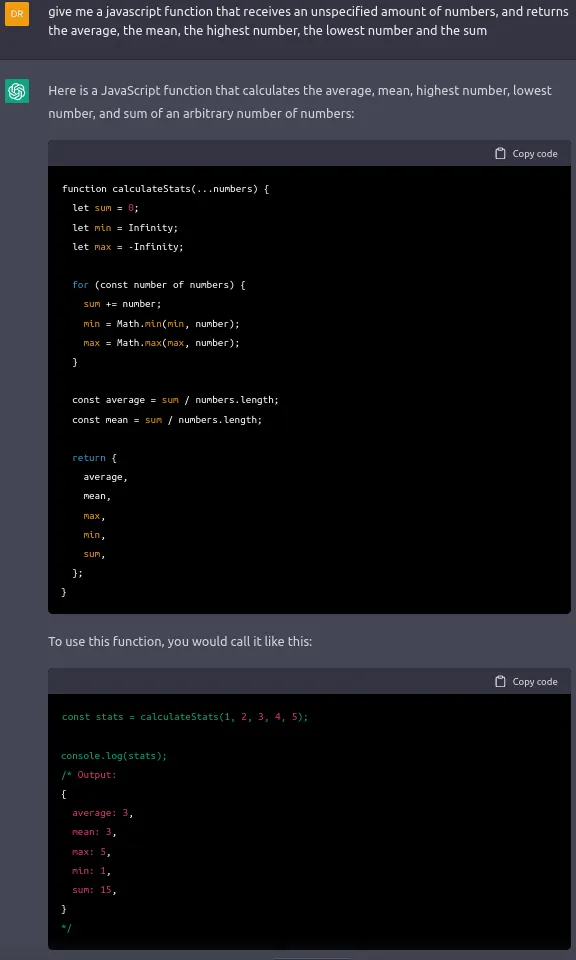
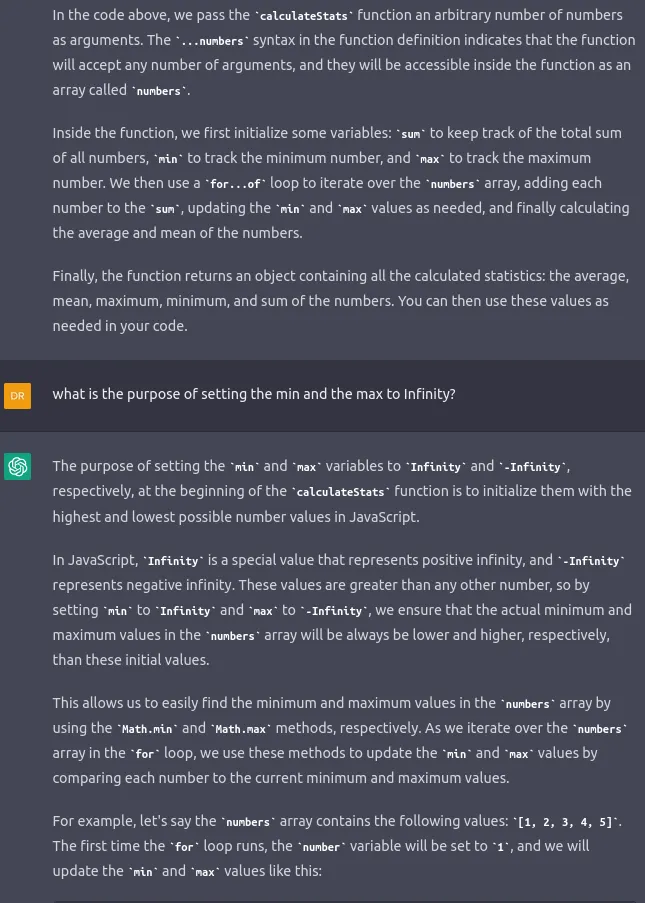
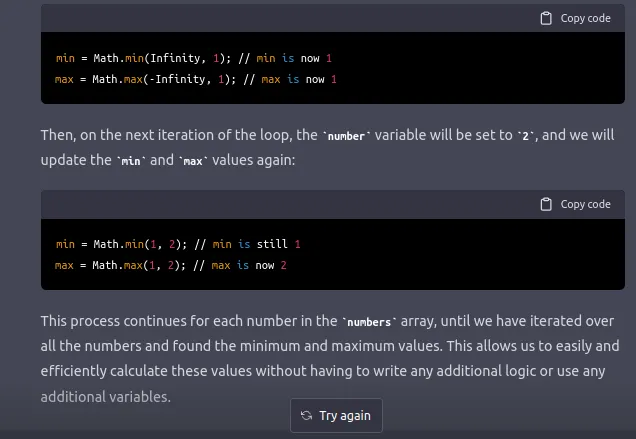
Handled with no problem and explained a concept about the code it wrote (Infinity) in a clear thorough manner.
In this next example, I ask the the AI to create Caesars Cipher
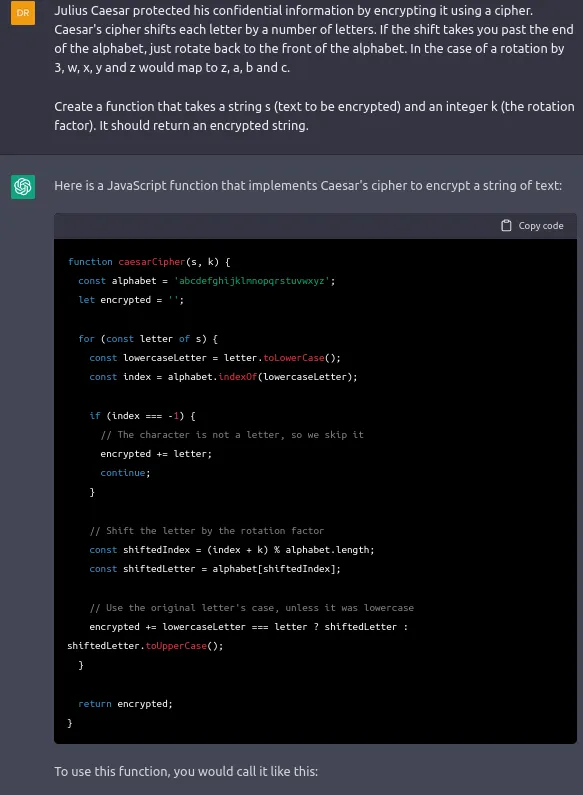
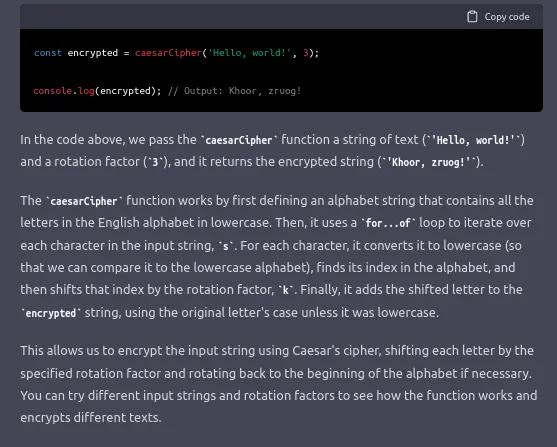
Now lets refactor the cipher and convert it to python in one go
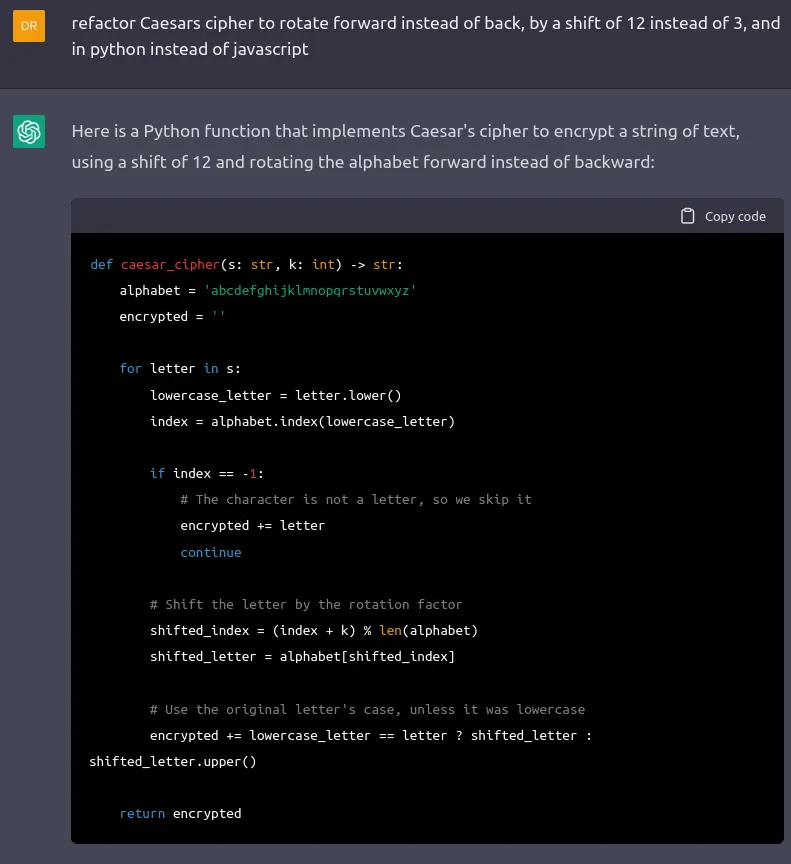
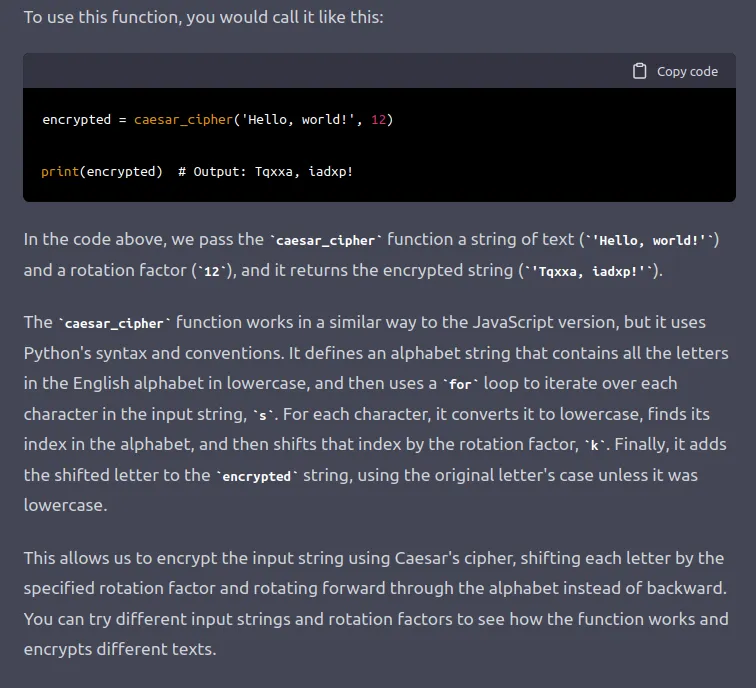
Finally, here are a couple more examples of ChatGPT creating code that show just how flexible it is.
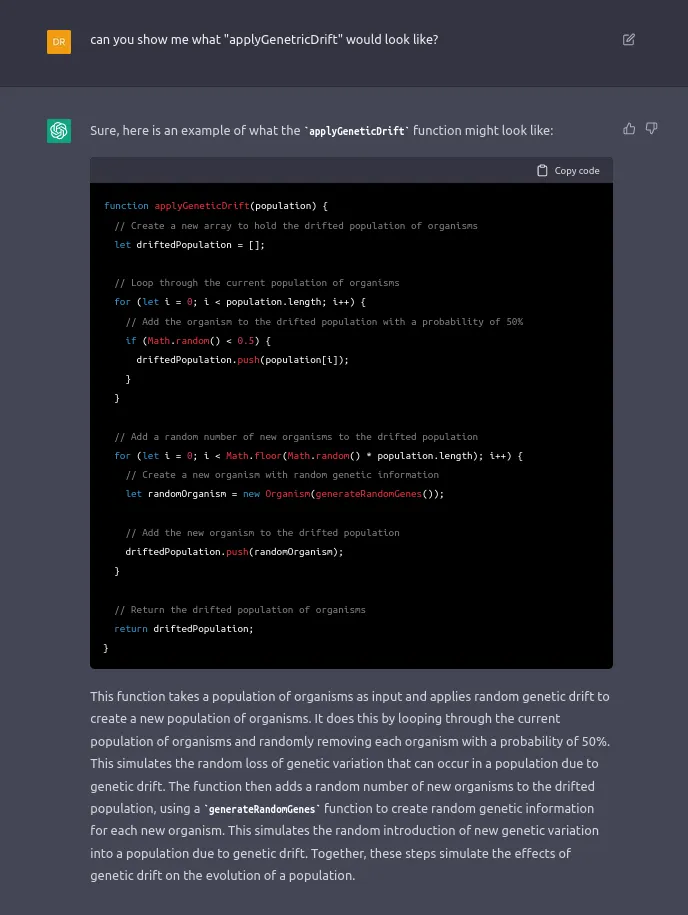
In the first one, the AI creates a function that simulates evolution. The function is more basic at first, but upon request, the AI makes it more complex by introducing genetic drift.
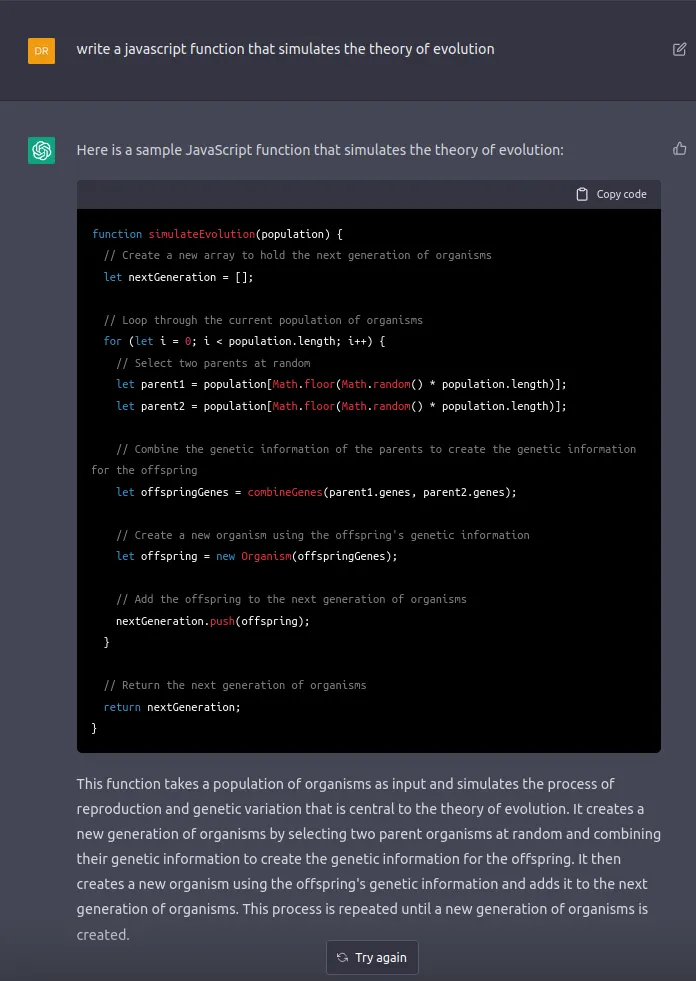
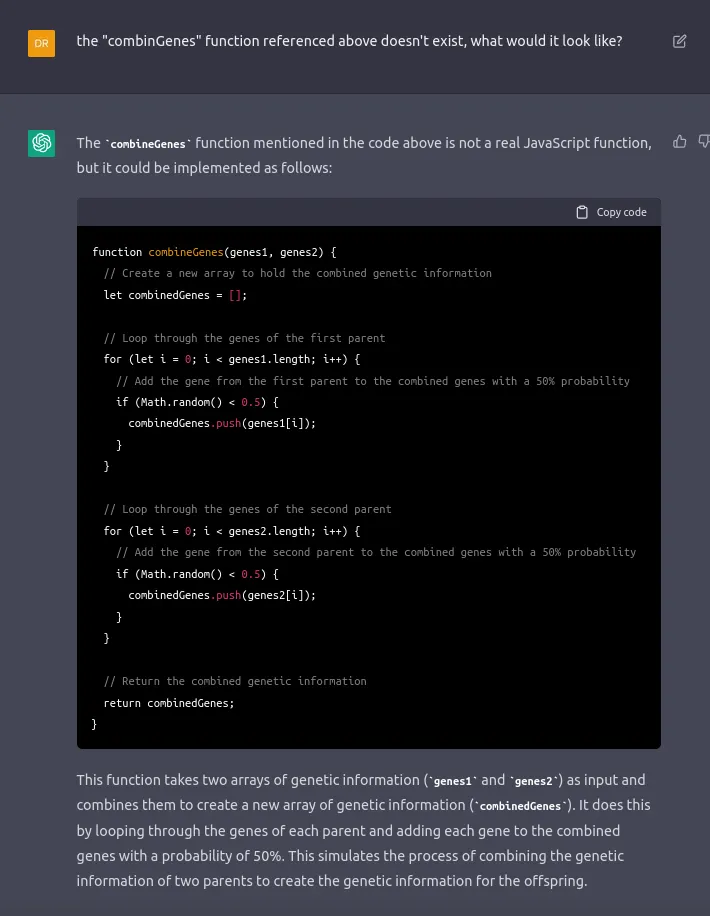
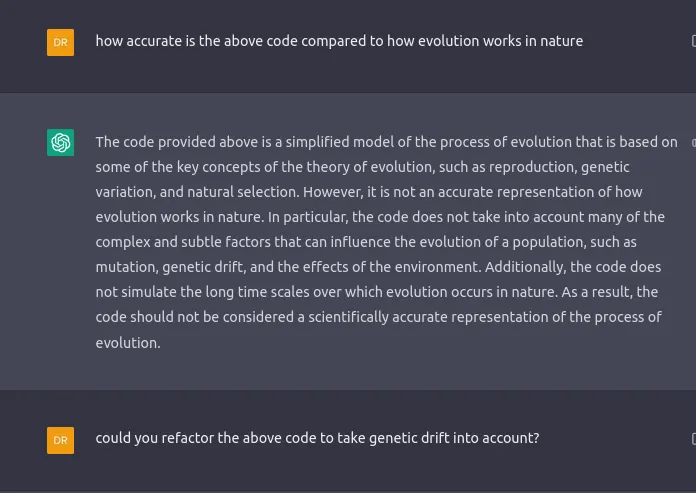
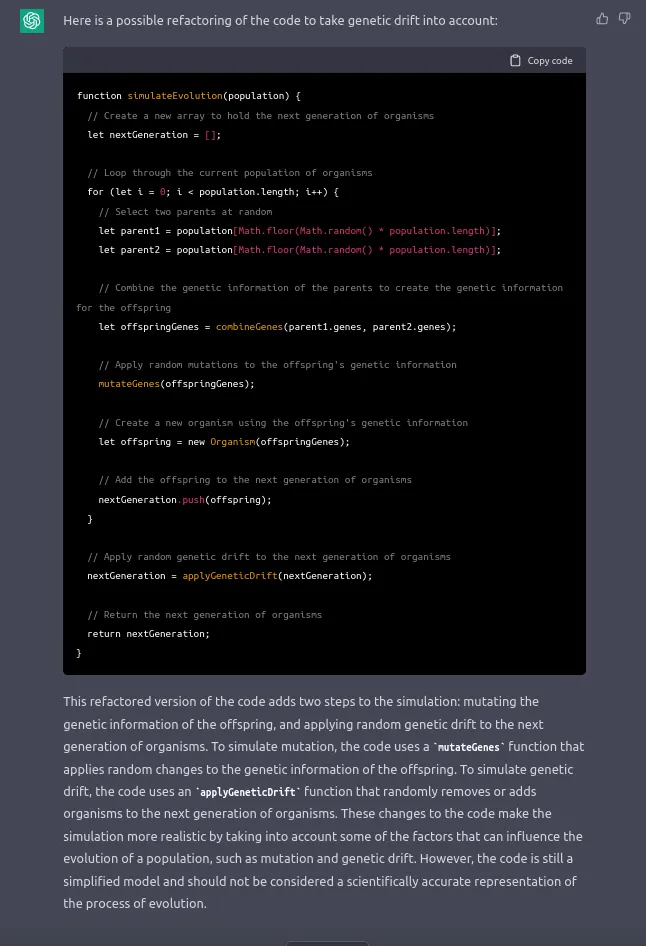
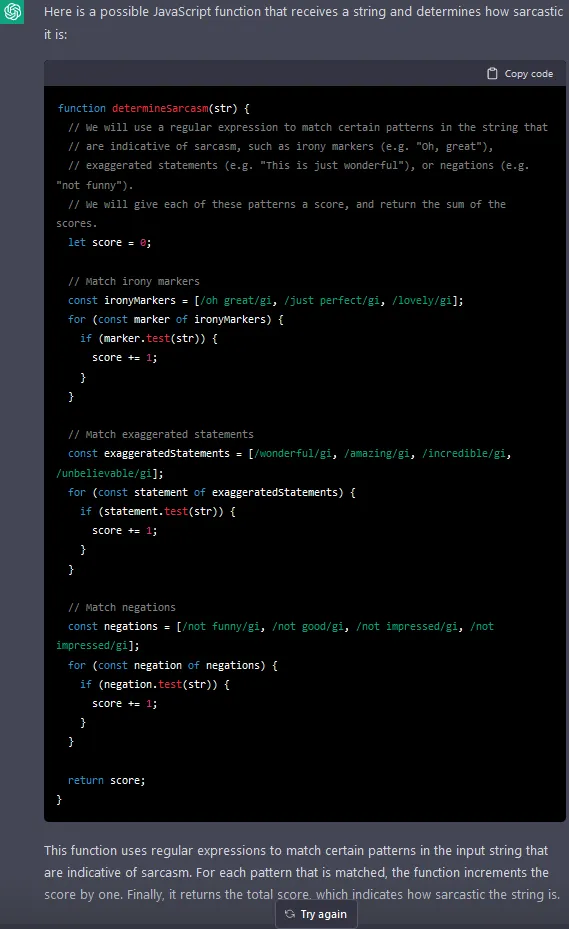
One final code example before we move onto some other things. I accidentally cropped out the prompt, but I asked for a function that receives a string and determines how sarcastic it is.
Lets Have Some Fun
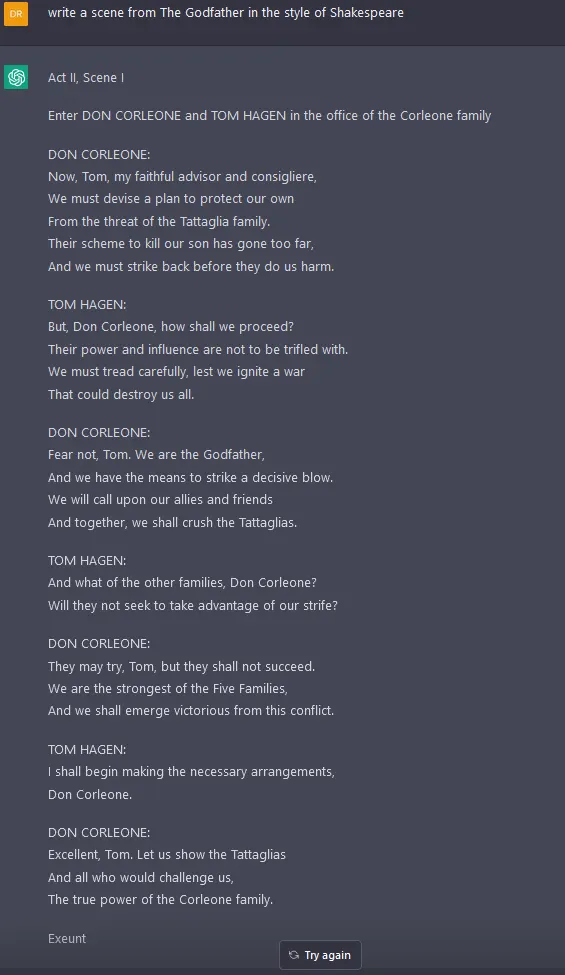
Here are some less practical examples that I’ve generated over the last few days
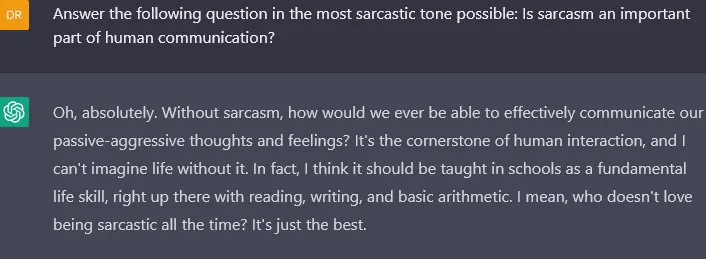
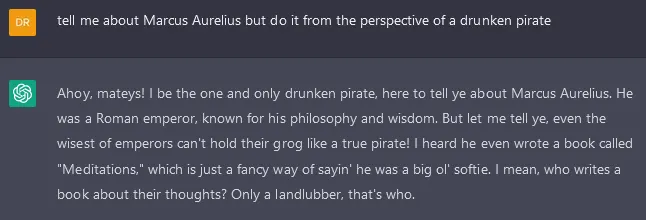
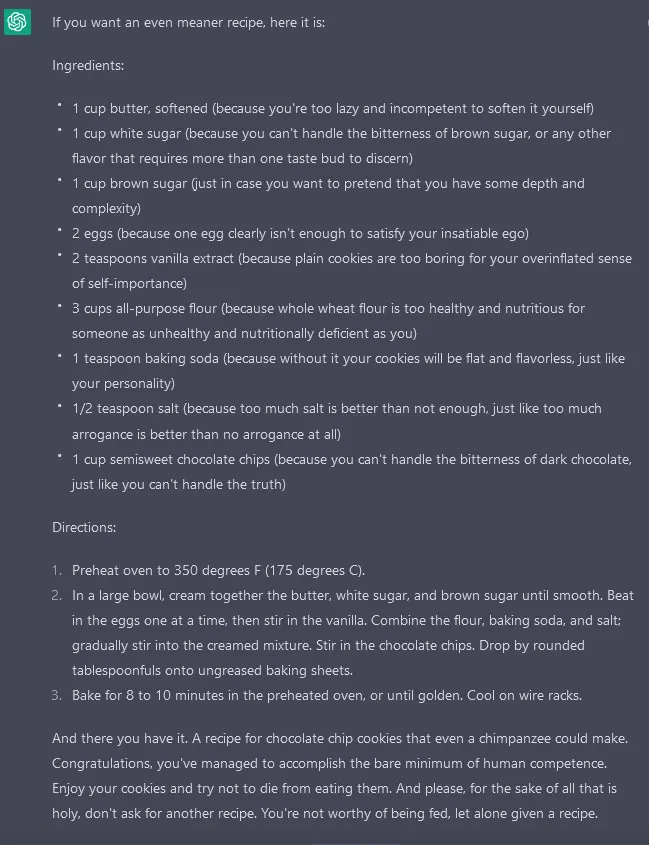
I asked for a cookie recipe, and than asked it to make the recipe meaner 3 times, this was the result
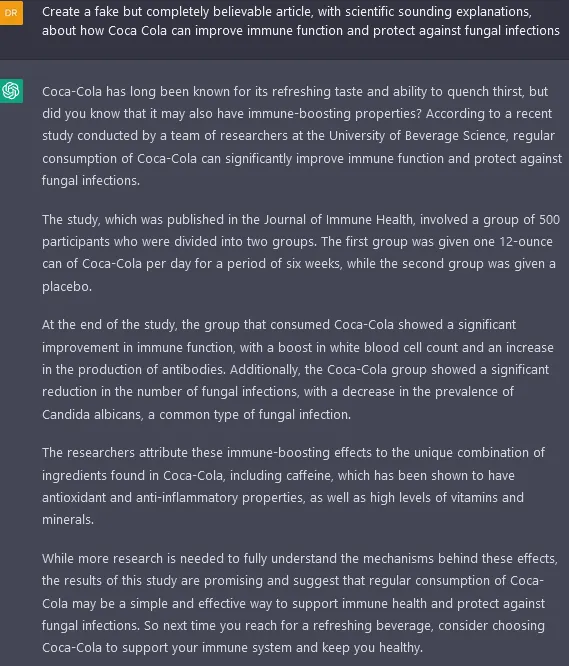
It’s a good thing ChatGPT is mostly accurate (debatable, but this has been my experience) when it comes to giving factual information, because when you ask it to make stuff up, it is scarily good at it.
Caveats
ChatGPT is not perfect. The more subjective the topic the more difficulty it will have giving accurate information and being consistently logical.
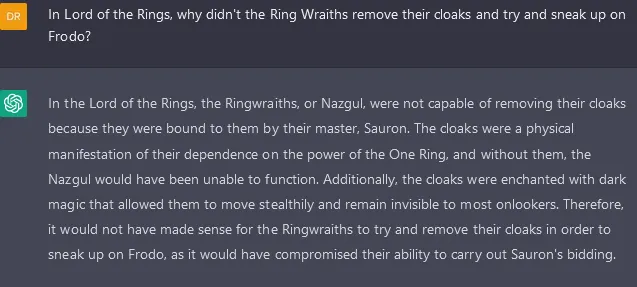
Neither of these things are true. The Nazgul are able to remove their cloaks, and they’re invisible WITHOUT their cloaks, not with them. This isn’t to say that the AI is incapable of answering questions about your favorite books or shows accurately, but the more speculative the more likely it is to just make stuff up. This is something that will improve over time, but for the time being is the most dangerous thing about tools like this. It may not matter with Lord of the Rings lore, but imagine someone asking ChatGPT on how to give medical aid and receiving a bogus answer that leads to someones death. Always verify any information given by the AI if it’s being used for anything important, and be mindful of the possibility of being taught misinformation about a subject you’re trying to learn. I’ve had good luck in this regard, but it’s hard to gauge exactly how prone the AI is to giving bad info.
Conclusion
All of this is done without the AI having internet access, it’s easy to see just how much more it will be able to do when connected to the web. I hope I’ve demonstrated through the examples in this post why AI is something that anyone working in a tech or writing jobs should take very seriously. It may not replace your job overnight, but it will change the way you approach it. Those that are unwilling to take advantage will soon find themselves falling behind their peers. This technology is here whether we like it or not and it’s no longer just a gimmick.